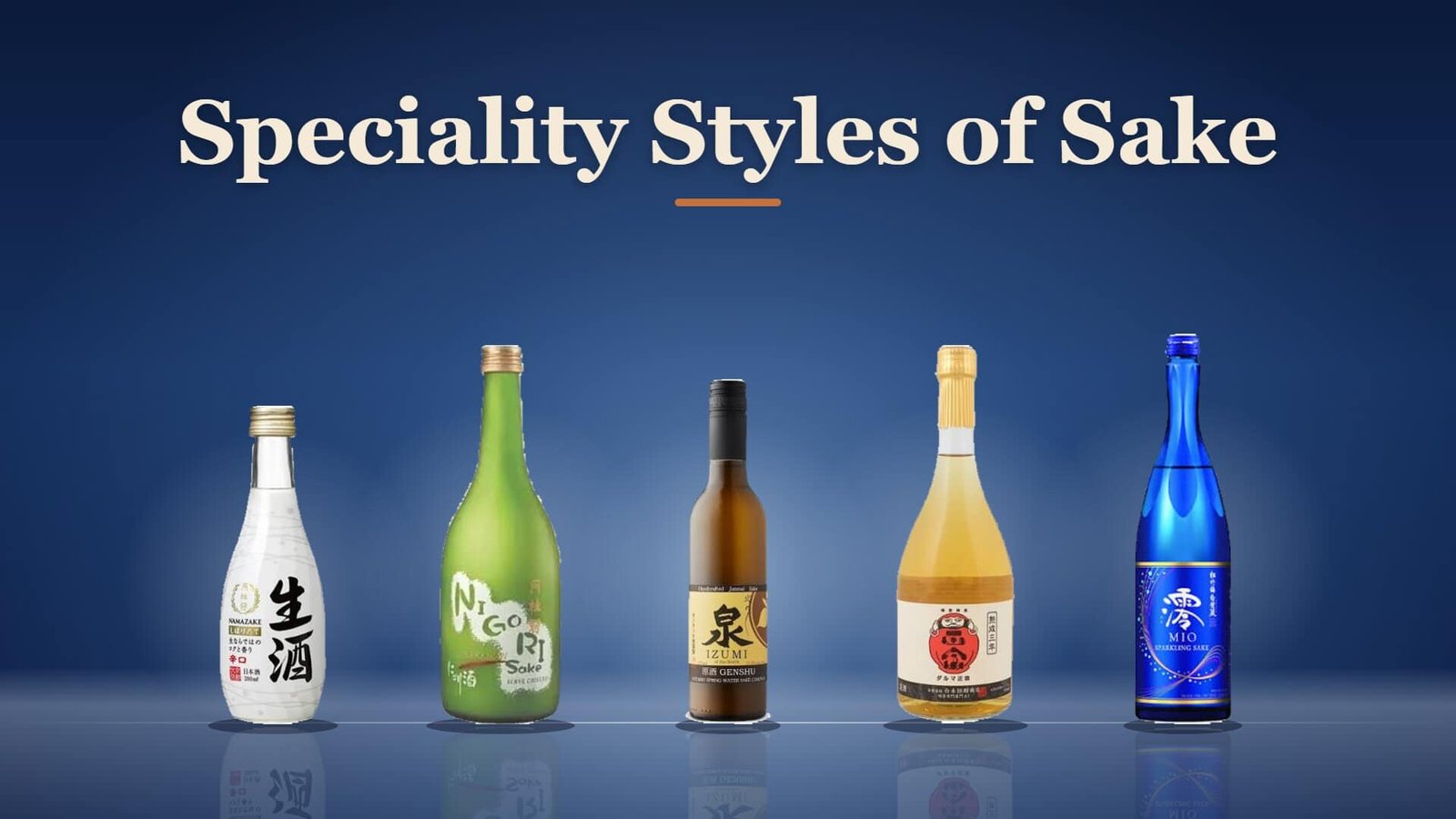

Sake is far more diverse than it first appears. Beyond familiar categories such as Junmai, Ginjo and Daiginjo, producers also make speciality styles of sake using different production, maturation and finishing choices.
These speciality sake styles can change everything from appearance and alcohol level to texture and flavour. For beverage professionals and sake enthusiasts, knowing terms such as Namazake, Nigori and Genshu also makes navigating a sake list or bottle label much easier.
Here are five speciality sake styles worth understanding.
Namazake: Unpasteurised Sake
Namazake is sake that has not been pasteurised.
Most sake undergoes pasteurisation to improve its stability. Namazake skips this process, helping it retain a particularly fresh and vibrant character.
Its flavours are often fruity, zesty and lively. However, the lack of pasteurisation also makes Namazake more sensitive to storage conditions. It needs refrigeration to maintain its quality and freshness.
For service professionals, this is an important distinction. Namazake should receive careful temperature control during storage and service.
Nigori: Cloudy Sake
Nigori is a cloudy style of sake that contains fine rice particles.
Its distinctive appearance makes it easy to recognise. Rather than looking completely clear, Nigori has a milky or cloudy appearance due to rice solids remaining in the sake.
The style often has a sweet, creamy and textured character. This fuller texture can make Nigori taste quite different from many clear styles of sake.
The rice particles can settle at the bottom of the bottle. Therefore, Nigori may need to be gently shaken before serving to redistribute them.
Genshu: Undiluted Sake
Genshu is sake that has not been diluted with water after fermentation.
Producers commonly add water to sake before bottling to bring down its alcoholic strength. With Genshu, this dilution does not take place.
As a result, Genshu generally has a higher alcohol level, typically around 17–20% ABV. It also tends to have a bold, rich and full-bodied style.
Understanding the term Genshu can therefore give you an immediate clue about what to expect from the sake before you taste and serve it.
Koshu: Aged Sake
Koshu is sake that has undergone extended ageing.
While many sakes focus on freshness, Koshu explores what happens when sake develops over time. It may age for one to three years or longer.
Ageing can create oxidative characteristics. The colour leans towards amber, while flavours become richer and more complex. The sake may also develop nutty and sherry-like notes.
Koshu is less common than many other sake styles, but it demonstrates just how broad the category can be.
Sparkling Sake
Sparkling sake is a style with carbonation that gives the drink its characteristic bubbles.
It tends to have a light, fizzy character and is often mildly sweet. This makes it an approachable introduction to sake for people who are more familiar with sparkling beverages.
Its lively style also makes sparkling sake suitable as an aperitif or for celebrations.
Elevate Your Understanding of Sake
If you are interested in learning more about sake, what you have learned above is just the beginning.
The WSET Level 2 Award in Sake at Sonal Holland Academy takes your knowledge further with a structured study of sake production, styles, tasting and service.
Elevate your understanding of sake and build more confident, professional knowledge with this internationally recognised qualification.
Explore WSET Level 2 Award in Sake batches at Sonal Holland Academy.