
Scotch has long carried an image of craftsmanship, heritage and luxury. In India, it also holds an important place in premium drinking culture. From hotel bars and fine-dining restaurants to celebrations and gifting, Scotch is a category hospitality professionals encounter regularly.
Yet ordering Scotch can quickly become confusing. A guest may ask for a single malt Scotch, while another prefers a blended Scotch. Both are Scotch whisky, but they are not the same.
For anyone building a career in hospitality or beverages, knowing this basic difference makes it easier to understand menus, recommend bottles and speak about whisky with confidence.
What Is Scotch Whisky?
First, Scotch is not simply another name for whisky.
To qualify as Scotch whisky, the spirit must follow specific rules. Most importantly, it must be made in Scotland from permitted ingredients and matured there in oak casks for at least three years. It must also meet other production and bottling requirements set by Scotch whisky regulations.
So, while whisky is produced around the world, only whisky that meets Scotland’s legal requirements can be called Scotch.
How Is Scotch Whisky Made?
The process begins with grains, water and yeast.
For malt whisky, barley first goes through malting. The grains are encouraged to germinate, which activates enzymes needed to convert starch into fermentable sugars. The malt is then dried to stop germination.
Next, the grain is milled and mixed with hot water to extract sugars. Yeast then converts these sugars into alcohol during fermentation.
The resulting liquid is distilled. After distillation, the spirit must mature in oak casks in Scotland for at least three years before it can qualify as Scotch whisky.
These basic production steps help explain the two Scotch styles that consumers often encounter: single malt and blended Scotch.
What Is Single Malt Scotch?
The word single often causes confusion. It does not mean that the whisky comes from a single cask.
Single malt Scotch is made from 100% malted barley at one distillery and distilled in pot stills.
A bottle can therefore contain malt whiskies from several casks or different batches, provided they all come from the same distillery.
Single malts can show a wide range of flavours. Distillery character, production choices, peat use, cask type and maturation all influence the final whisky.
So, there is no single flavour profile that defines all single malts.
What Is Blended Scotch?
Blended Scotch combines one or more single malt Scotch whiskies with one or more single grain Scotch whiskies.
Single grain Scotch is produced at a single distillery. Unlike single malt, it can include other cereals alongside malted barley and is commonly produced using continuous distillation.
Why blend them?
Blending allows producers to bring together whiskies with different characteristics. Malt whisky can contribute flavour and complexity, while grain whisky often provides a lighter base. A skilled blender combines these components to create the desired house style and maintain consistency from bottle to bottle.
Blended Scotch is an important part of the Scotch whisky category and includes many globally familiar whisky brands.
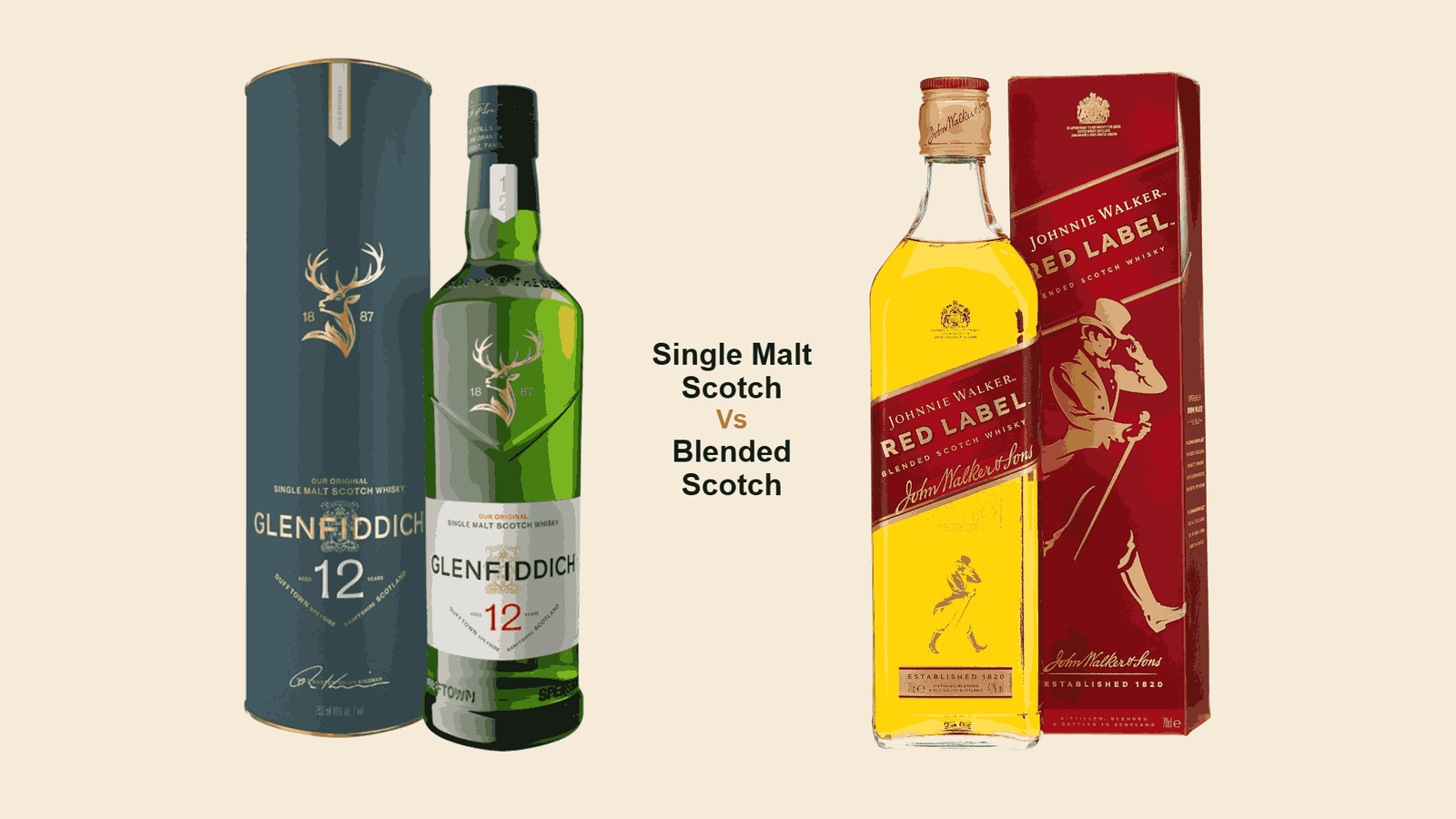
Single Malt vs Blended Scotch: What Is the Difference?
The easiest way to remember the distinction is to look at what goes into the bottle.
Single malt Scotch: 100% malted barley, produced at one distillery and distilled in pot stills.
Shows distillery character: Each single malt reflects the production choices of one distillery, including fermentation, distillation, peat use and cask maturation.
Offers distinctive flavour profiles: Style can vary widely depending on the distillery, cask type, maturation period and production methods.
Highlights craftsmanship: Single malts are often valued for their individuality, giving drinkers a clearer sense of a particular producer’s house style.
Useful in service: Knowing the distillery and flavour profile helps professionals recommend a whisky based on a guest’s taste preferences.
Blended Scotch: A blend of one or more single malt Scotch whiskies and one or more single grain Scotch whiskies.
- Creates consistency: Blenders combine different whiskies to maintain a recognisable house style from one batch to the next.
- Builds balance: Malt whisky can add flavour and complexity, while grain whisky can contribute a lighter, softer character.
- Offers an approachable style: Many blends are designed to be smooth, balanced and easy to enjoy, which makes them widely popular.
- Important for major brands: Blending makes it possible to produce larger volumes while keeping the flavour profile familiar and consistent for consumers.
Improve your beverage knowledge and build skills that can support career growth. Enrol at Sonal Holland Academy for the WSET Level 1 Award in Spirits. Click here to explore our upcoming batches for this course.